
Services
Pre-Homologation and Homologation Testing
Verification and approval of voice, data, and value-added service capabilities for mobile devices such as smartphones and tablets running Android operating systems, employing GSM, WCDMA, and LTE technologies, alongside homologation and testing for mobile devices, M2M, IoT, and value-added services.
Multiband Certification Multiband / SAE
To sell cell phones in Chile, you must comply with the certification requirements of SUBTEL Resolutions No. 1463 and 1474.
This certification is for operators, mobile device manufacturers, importers, and related entities. Failure to comply with this certification will prevent you from selling cell phones.
Reduced Scope Equipment Certification
Exempt Resolution No. 737:2025 establishes a modification for equipment that uses unlicensed radio spectrum and requires certification in accordance with SUBTEL Exempt Resolution No. 1985 of 2021.
Manufacturers, distributors, and retailers of equipment that uses unlicensed radio spectrum must place a QR code on the equipment they sell, which links to their website or another site that provides information on the technical parameters required by the regulations.
Administrative Registration
This service is designed for individuals who have purchased equipment abroad for personal use and wish to utilise it in Chile. Applications should only be submitted through the online form. For any questions or further information, please contact us at info@iaiasesorias.cl.
Approval Of Other Devices
Registration of the IMEI in the central database for devices that meet the specifications of this category, including GPS, M2M, POS systems, alarms, tablets, laptops, IoT, smartwatches, and more.
Pre-homologation, Homologation and Testing of Mobile Equipment
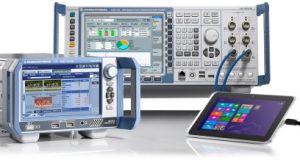
This service is aimed at mobile operators, mobile device manufacturers, importers, and similar entities. The services we offer are as follows:
– Verification and certification of voice, data, and VAS capabilities for mobile devices (smartphones, Android tablets, and basic phones) using GSM/WCDMA/LTE technologies.
– Verification and translation of menu trees, labeling, and user interface (UI).
– Verification of UI customization policies and network features according to the mobile operator’s specifications.
– Mobility performance testing and driving tests for voice, data, and VAS.
– 3GPP compliance testing and verification of the mobile device’s minimum technical requirements on the mobile operator’s network.
– Troubleshooting and root cause analysis of interoperability issues between the mobile network and devices from major manufacturers.
For more information, please contact us at info@iaiasesorias.cl
Registration of other types of M2M/IoT/VAS mobile equipment and devices
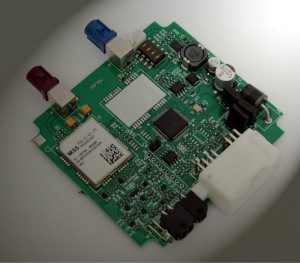
is service is for any individual or company that acquires specialized mobile devices that use a cellular network for communication. These devices are excluded from the homologation process according to Article 7 of Resolution Ex 1463 of 2016.
The following are excluded from homologation: terminals used for specific purposes, such as M2M, POS, and GPS, as well as tablets, dongles, and terminals intended for use by people with disabilities, such as senior citizens or people with visual or hearing impairments, and whose characteristics differ from those of most devices and whose commercialization is not on a mass scale. Notwithstanding the above, these terminals must be registered in the database.
Registration of other types of M2M/IoT/VAS mobile equipment and devices
is service is for any individual or company that acquires specialized mobile devices that use a cellular network for communication. These devices are excluded from the homologation process according to Article 7 of Resolution Ex 1463 of 2016.
The following are excluded from homologation: terminals used for specific purposes, such as M2M, POS, and GPS, as well as tablets, dongles, and terminals intended for use by people with disabilities, such as senior citizens or people with visual or hearing impairments, and whose characteristics differ from those of most devices and whose commercialization is not on a mass scale. Notwithstanding the above, these terminals must be registered in the database.
Regulations for Reduced Range Equipment
Are you an importer or distributor of equipment with WiFi, Bluetooth, Zigbee, or RFID in Chile?
Then you should be aware of Exempt Resolution No. 737, which comes into effect in February 2026, and which modifies Exempt Regulation No. 1985 of 2021 for equipment with limited range.
Most equipment with limited range no longer requires SUBTEL certification using the old procedure of requesting formal authorization from SUBTEL.
Instead, you need to generate a QR code to place on the equipment packaging that links to your website or a third-party website with technical documentation.
Which equipment must comply with this requirement?
Short-range devices are those that use unlicensed radio spectrum and connect wirelessly, such as:
• WiFi: IoT devices, IP cameras, routers, access points
• Bluetooth: Headphones, speakers, wearables, medical devices
• Zigbee: Home automation sensors, smart lighting, industrial control
• RFID: Tags, readers, access control, inventory
• Others: NFC, Z-Wave, Thread, Matter
For more information, please email us at info@iaiasesorias.cl
Registration of other types of M2M/IoT/VAS mobile equipment and devices
is service is for any individual or company that acquires specialized mobile devices that use a cellular network for communication. These devices are excluded from the homologation process according to Article 7 of Resolution Ex 1463 of 2016.
The following are excluded from homologation: terminals used for specific purposes, such as M2M, POS, and GPS, as well as tablets, dongles, and terminals intended for use by people with disabilities, such as senior citizens or people with visual or hearing impairments, and whose characteristics differ from those of most devices and whose commercialization is not on a mass scale. Notwithstanding the above, these terminals must be registered in the database.
Multiband Standard/SAE Certification
This service is aimed at operators, mobile terminal manufacturers, importers, and similar entities; the services we provide are detailed below: Homologation process:
– All voice and data calls are conducted for each technology according to the parameters established by SUBTEL. Based on the test results, the label to be used by the tested device will be determined.
-Receive cellular broadcast messages on at least one of the channels established in the regulations.
-The mobile device must be compatible with all mobile networks in Chile on at least one technology at the time of homologation and must be unlocked for national use.
Shipment Control
Inspection of batches of already certified phones; verification that the equipment information matches the information contained in the respective certificate.
For more information, please email us at info@iaiasesorias.cl
Multiband/SAE Standard
Regulations for labelling and certification of mobile phones SUBTEL Exempt Resolution No. 1463 of 2016 and No. 1474 of 2016.
What is the Multiband/SAE standard?
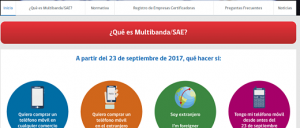
The regulations issued by Subtel, effective September 23, 2017, require all mobile phones sold in Chile to undergo a certification process verifying the following aspects:
1. They must support all national frequency bands in at least one of the following technologies: 2G, 3G, or 4G.
2. They must be compatible with the SAE (Emergency Alert System) implemented by the Chilean government. This means that the phones can receive emergency alert messages designed by ONEMI (National Emergency Office), which will be issued in emergency situations affecting a specific location or geographic area. The message will consist of an audible alert and a text message with important information regarding the emergency situation.
3. They must be unlocked for use with any mobile carrier in the country.
4. In addition to the certification process and the new seal, mobile devices must be registered in the national centralized equipment system to be used by national operators.
Why do I need to register the IMEI of my device purchased outside of Chile?
On November 10, 2018, the regulations for registering devices from abroad purchased by individuals changed. From the date of receipt and activation, you have 30 days to register your device; otherwise, it will be blocked.
To register, you will need the following documentation required by SUBTEL:
– A photo of the receipt or invoice proving the purchase abroad. If you don’t have this, a photo of your passport showing entry into the country within the last 90 days for Chilean citizens and 120 days for foreigners.
– A photo of your national identity card, passport, or DNI (National Identity Document).
– A photo of the physical IMEI (usually located under the battery or on the SIM card tray) or the logical IMEI, which can be obtained by dialing *#06# or from the device’s information menu. The IMEI is your device’s unique identifier.
Devices activated before the new regulations were automatically registered and will continue to function without issue.
I’m visiting Chile and I’ve brought my personal phone with me!
1. Starting February 11, 2019, foreigners traveling to Chile who wish to use their phone or other mobile device with a local SIM card must register it in the system to continue operating in Chile after 30 days of activation on the network.
2. You have 60 calendar days from the date the device enters the country to complete this registration. However, if the device has not been registered, it will function for 30 calendar days from network activation before being blocked. To register, even if the device is blocked, you must contact your mobile provider or a certified company (www.multibanda.cl/ia) and complete an administrative registration. Once your phone is activated, you will receive an SMS with instructions for completing this online registration.
3. You must provide some background information about the phone and your personal details, as well as prove that you brought the phone from abroad, making a statement that acknowledges this circumstance and the effects of your phone not being approved.
4.- A phone purchased abroad has not been subjected to a homologation process, so it is not possible to guarantee that your phone is compatible with the technologies (2G, 3G, 4G) advertised for it, nor is it possible to guarantee that it supports the Emergency Alert System (EAS).
5.- If after a period of 1 or 2 hours from when you receive confirmation from the Certifying Company that it has carried out the Registration of the same in the Centralized Database it does not work, go to the Chilean telecommunications company with which you contracted the service (whether plan or prepaid) and to which the Sim Card you are using belongs. Note: If you only use your phone in roaming or WiFi mode, you do not need to register.
What are the other devices and why do I need to register them?
These are special-purpose mobile devices whose primary function is not voice communication, such as GPS, M2M, POS, and tablets. These devices are excluded from the homologation process according to Article 7 of Resolution Ex 1463 of 2016.
Where can I check if my device is already registered?
You can check your device’s IMEI status at the following mobile operator URLs:
Soy extranjero / I’m foreigner
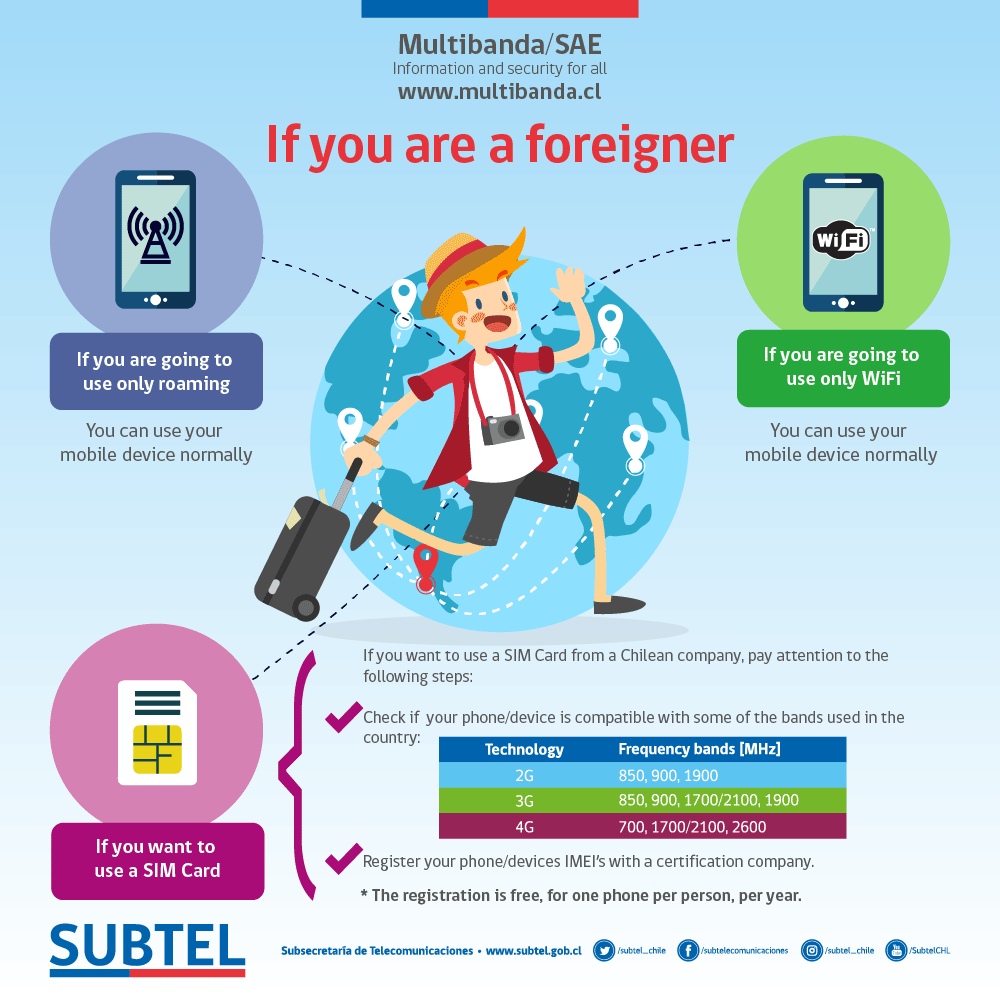
SI am a foreigner traveling to Chile and want to use my phone with a local SIM card.
1. Starting February 11, 2019, foreigners traveling to Chile who wish to use their phone or other mobile device with a local SIM card must register it in the system to continue operating in Chile after 30 days of activation on the network.
2. You have 60 calendar days from the date the device enters the country to complete this registration. However, the device will function for 30 calendar days from network activation before being blocked if it has not been registered. To register, even if the device is blocked, you must contact your mobile provider or a certified company (www.multibanda.cl/ia) and complete an administrative registration. Once your phone is activated, you will receive an SMS with instructions for completing this online registration.
3. You must provide some background information about the phone and your personal details, as well as prove that you brought the phone from abroad, making a statement that acknowledges this circumstance and the effects of your phone not being approved.
| Situation | Documents to Submit |
| Telephone brought into the country by a foreigner | 1. Copy of the ID of the person who brought the phone into the country 2. Copy of passport or proof of entry into the country or Copy of entry ticket or equivalent document 3. Image (photo) of the phone’s physical IMEI or Screenshot of the IMEI number (*#06#) 4. If the request is made by a third party on behalf of the interested party, a copy of the third party’s ID and a simple power of attorney in their favor. |
Note: The copy of the entry documents must clearly show the date of entry. The copy of the receipt or purchase documents must clearly show the buyer’s name and the product purchased.
4. One (1) device can be registered FREE of charge per year, provided that the certifying company does not exceed 2% of its total IMEI registrations in the system with this registration. In that case, to continue receiving the free registration, another certifying company can be used, provided that the registration does not exceed this 2%.
5. The certifying company will carry out this procedure, verifying that the applicant is an individual, that only one device is being registered per Administrative Registration request, that the device was acquired abroad (receipt, invoice, passport, and/or tickets, etc.), and that the IMEI printed on the device matches the IMEI obtained through configuration. With this verification, the device will be registered and can be used on the mobile network of the country that the phone supports.
6. A phone purchased abroad has not undergone a homologation process, therefore it is not possible to guarantee its compatibility with the advertised technologies (2G, 3G, 4G) or its support for the Emergency Alert System (SAE).
7. If, after 1 or 2 hours from the time you receive confirmation from the Certification Company that your phone has been registered in the Centralized Database, it does not work, contact the Chilean telecommunications company with which you contracted the service (whether plan or prepaid) and to which the SIM card you are using belongs.
To verify if your device is correctly registered in the system, enter its IMEI on one of the mobile company’s websites listed in [link to IMEI verification website].: Consulta IMEI
Note: If you only use your phone in roaming or WiFi mode, you do not need to register.
I want to buy a phone in any store in Chile. What should I look out for?
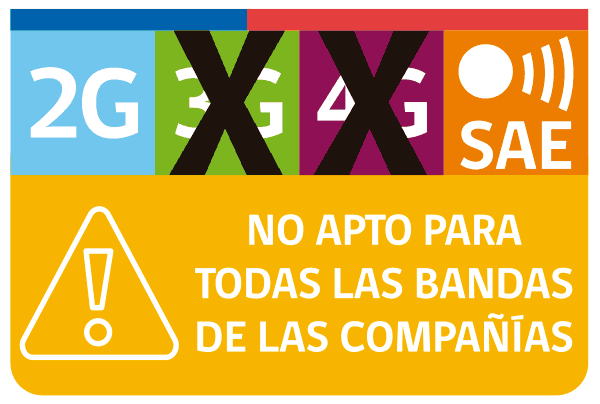
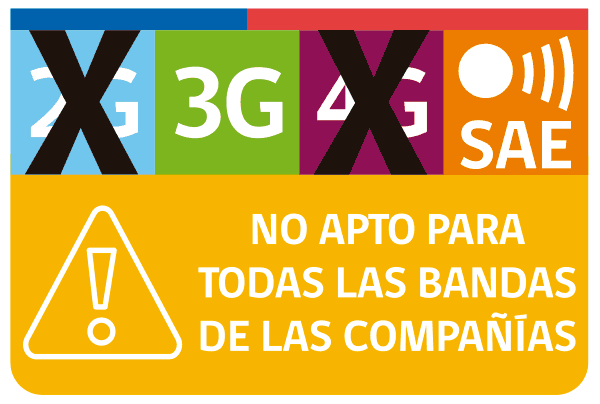
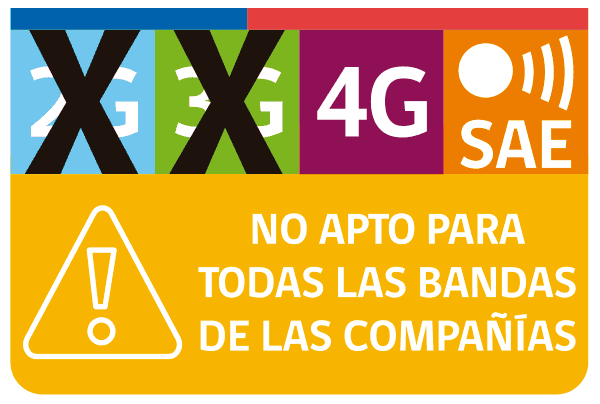
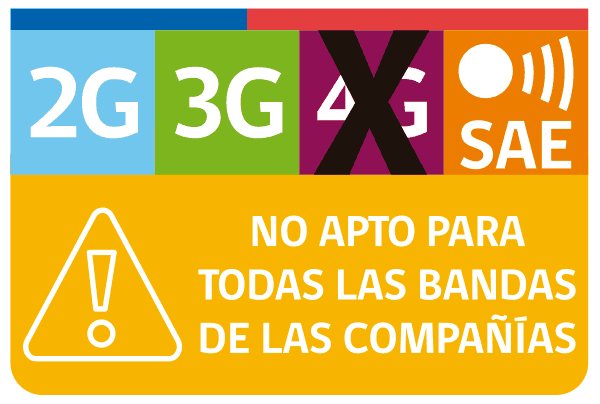
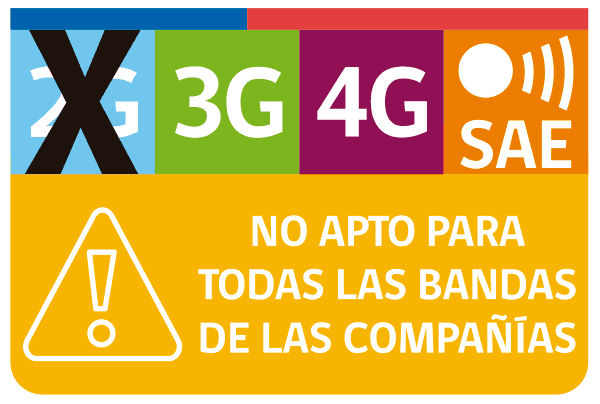
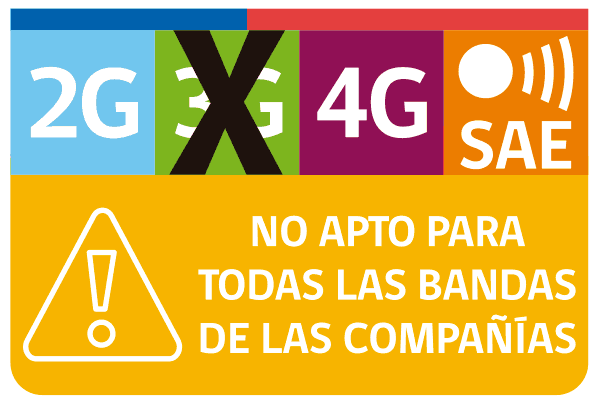
1.-Devices that enter the commercial distribution chain or are advertised for sale must carry a temporary seal that clearly identifies the band support for each technology, both on their boxes, wrappers, or packaging, as well as in the corresponding advertising graphics at points of sale and in physical or virtual spaces such as magazines, newspapers, and websites.
The certification seal aims to identify all terminal equipment that has complied with the mandatory approval and validation process established in Exempt Resolution No. 1,463, of June 13, 2016, of the Undersecretariat of Telecommunications and its amendments.
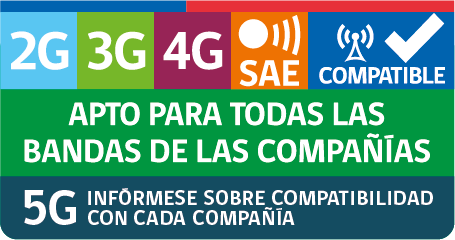
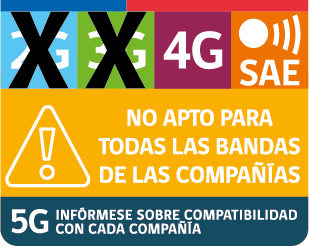
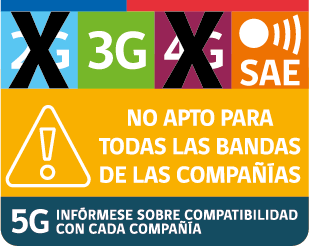
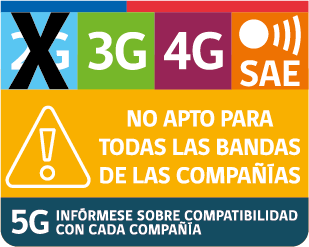
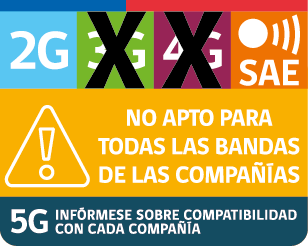
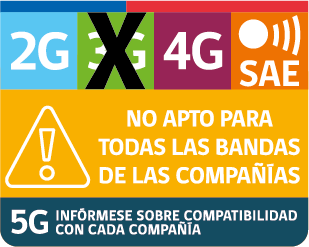
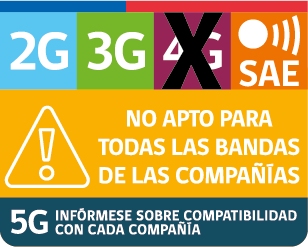
Additionally, and only for devices with 5G technology, the seal must include or add at the bottom, for its different versions, the phrase “5G:INFORMESE SOBRE COMPATIBILIDAD CON CADA COMPAÑIA”, according to the following figures.
Logos:
 |
 |
 |
 |
 |
 |
Equipment that enters the commercial distribution circuit or is advertised for sale must carry, both on their boxes, wrappers, or packaging, as well as in the corresponding advertising graphics at points of sale and physical or virtual spaces such as magazines, newspapers, and websites, a temporary seal that clearly identifies the band support by technology.
 |
||
 |
 |
 |
 |
 |
 |
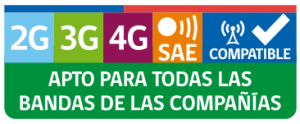
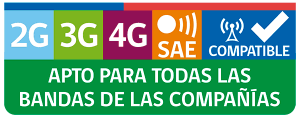
2.-If it has the following seal, it means that the phone supports all the bands of 2G, 3G, and 4G technologies. When you want to switch carriers, you won’t have any problems with the phone on the new carrier in the indicated bands.
Prefer this stamp:
If it has any of the other seals (not suitable seals), it means that the phone does not have some of the bands of the technology or technologies marked with an “X”. This means that the phone might not work on some companies’ networks for those technologies.
All phones sold in Chile support the Emergency Alert System (SAE).
To make sure your device is registered:
If your phone does not meet the above, that is, it does not have a seal and/or does not work, you can exercise the rights granted to you by the Consumer Law. To verify if your device is properly registered in the system, enter its IMEI on one of the mobile company inquiry websites listed in: chech IMEI
What to look for when buying a phone in Chile
Q: What happens if I buy a phone without a seal?
A: You can go to the Undersecretary of Telecommunications or Sernac to report and claim this situation, depending on whether the phone was sold by a telecommunications company or not (retail, distributors, etc.).
Q: And if I buy it in Chile, is there any case in which I must register it and not the Certifying Company?
A: No, whether you buy a new phone in formal commerce, or whether you buy it from an importer, the equipment must be registered prior to its commercialization, since this (that it is registered once the Multiband Homologation/SAE process has been completed) is the responsibility of the person who sells the device and which is precisely what the seal accounts for.
On the other hand, if the phone is used, just because it has carried traffic on mobile networks before February 11, 2019, they must recognize it and it must work without problems. If it has been used after February 11, 2019, the fact that it has been able to carry traffic on mobile networks means that it was properly registered at the time. The important thing is always to make sure of the legitimate origin of the phone.
However, if you buy a phone in the informal trade, it may happen that the equipment does not work, not only because it is not registered but also because it has not complied with the Multiband/SAE Homologation process, and in that case you will not be able to register it.
Finally, and for the adequate information of the population, mobile telephone companies have enabled mechanisms through their websites, so that users can check if their devices could be blocked. The above only by entering the IMEI of the respective phone.
Q: I bought a phone after November 10, 2018 that claimed to be compatible with all bands in use in Chile; however, this is not the case. What rights do I have as a consumer?
A: A phone sold in Chile since November 10, 2018 had to be certified in its technical capabilities, which are reflected in its multiband seal. If the equipment in question does not have the characteristics indicated by the seal, the Consumer Law protects you to exercise exchanges and returns as appropriate. The foregoing is without prejudice to the actions that may be taken by the Undersecretariat of Telecommunications with respect to non-compliance with the approval process detected.
FAQ
In this section, we address concerns related to SUBTEL regulations.
What To Do If You Buy A Phone Abroad
From 23 September 2017, individuals purchasing a mobile phone abroad for personal use must register it in the system for it to operate in Chile. This process requires contacting a certification company authorised by SUBTEL.
Is There a Cost for Administrative Registration
According to the regulation, the user can register one (1) phone free of charge per year (365 consecutive days), then if the person wishes to make a second registration, the procedure will have a cost at this certifying body of $15,000 including VAT
How long does it take to register?
The estimated processing time is 24 business hours from receipt of the email; customer service is available continuously via email.
What To Do With Other Mobile Network Devices
Regarding the SAE Multiband standard
This is a public policy that, starting September 23, 2017, will ensure that all mobile phones sold in the country from that date forward receive emergency alerts from ONEMI (SAE) and will display a sticker indicating the phone’s compatibility with different technologies: 2G, 3G, and 4G. More information at www.multibanda.cl
I bought a mobile phone in Chile and it won't connect, what should I do?
If you purchased a mobile device in Chile and it won’t connect to a mobile network, you should return to the place of purchase to resolve the issue. Please note that devices sold in Chile after September 23, 2017, must display a logo indicating SAE and Multibanda support. If your device does not have this logo, you can request a refund and file a complaint with SUBTEL, specifying this issue. More information is available at www.multibanda.cl

Sobre I&I Asesorías Ltda.
I&I Asesoría Ltda. es un emprendimiento tecnológico que ayuda técnicamente a empresas de telecomunicaciones y proveedores de terminales en la introducción de nuevos productos y servicios, acortando el “time to market” y mejorando además la percepción de calidad de sus clientes.
Contamos con instrumentación para las pruebas de validación y posterior certificación de nuevos producto celulares
I&I Asesoría Ltda. fue fundada en 2010 por Ingenieros en el área de Telecomunicaciones con formación Electrónica y Civil Industrial, especialistas de áreas de Telecomunicaciones, con más de 20 años en el mercado trabajando en empresas de telecomunicaciones fijas y móviles, en áreas de Ingeniería, Operación y Desarrollo; colocando a disposición la experiencia en redes móviles y fijas, desde el inicio de las redes digitales hasta la más moderna red LTE/5G implementada en Chile.
Desde el año 2016 somos una de las empresa Acreditada por la Subsecreteria de telecomunicaciones (SUBTEL) para la certificación de Norma Multibanda/SAE.

Si es una empresa, fabricante de terminales móviles, importadores o similares, no dude en contactarnos en, info@iaiasesorias.cl

SUBTEL-Chile
Multibanda.cl

Extranjeria-Chile